How a "Defective" Product Was Intercepted in Our Warehouse: A Real Case Study
At Zhejiang Liyi Security Co., Ltd. (LIYI), our warehouse is more than just a transit point for goods; it is the final line of defense and the most rigorous "courtroom" for product quality. Every day, thousands of warning lights await shipment to global markets, but not everything that reaches the loading dock makes it onto the truck.
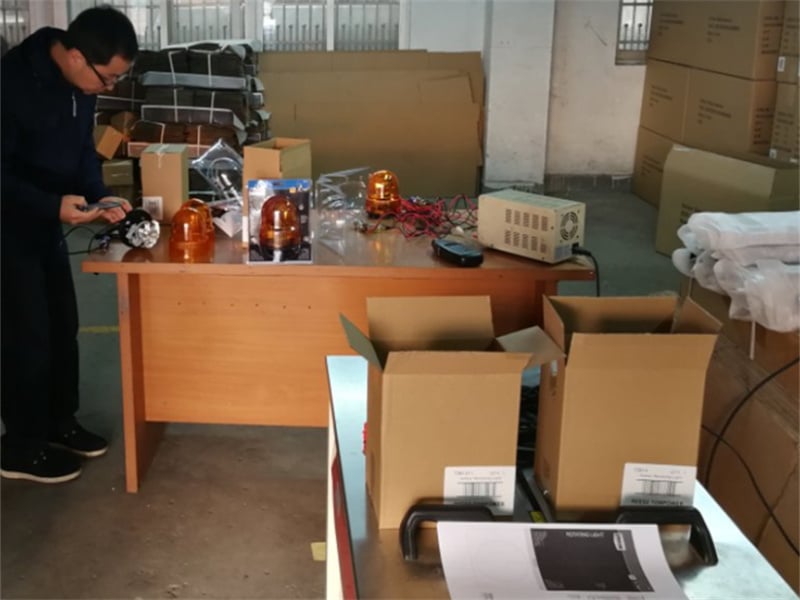
We recently encountered a telling case: a batch of Mini Lightbar Series products destined for North America was intercepted at the final inspection stage. The reason? Minor imperfections in the outer packaging cartons. Despite the products inside being perfect, the entire batch was halted, and the packaging was scrapped on the spot.
This is not an isolated incident—it is our standard operating procedure. At LIYI, we know that every detail defines a brand's lifeline. Here is how we stop a "defect" dead in its tracks.
1. The "Armor" Standard: Why We Scrapped Perfect Products for "Bad Boxes"
The North American market is one of the most demanding in the warning light industry. Shipments face long transoceanic journeys, enduring severe vibration, compression, and drastic temperature shifts inside containers. In this context, the cardboard box isn't just clothing; it is the product's armor.
Our Mini Lightbar Series, while compact, houses electronic components and optical lenses. To ensure zero damage, we enforce strict adherence to our internal document QZ/LY8.4-9 (Carton/Box Packaging Inspection Procedure).
The Incident:
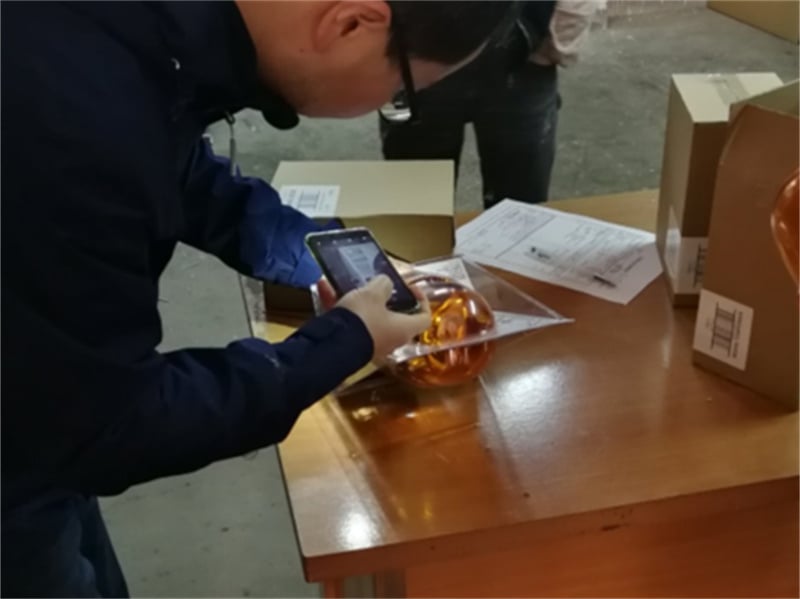
During a routine "blind test" simulation of the drop test, our Quality Control (QC) team noticed a microscopic lifting at the seal of a carton. To the untrained eye, it was invisible. The product inside was untouched. However, under Section 5 (Inspection Requirements) of our protocol, specifically regarding "Crease Lines" and structural integrity, this was a failure.
The Logic: "A thousand-mile dam collapses from an ant hole." We cannot gamble on that 0.01% risk. If a box fails a simulated drop in our lab, it will definitely fail in a shipping container. A loose box leads to scattered products, friction damage, or moisture ingress—resulting in a 100% loss for the client.
Therefore, we immediately initiated the interception protocol. The entire batch, valued at tens of thousands of dollars, was quarantined in the warehouse. We traced the root cause to a minute deviation in the glue application thickness during the box manufacturing process. We did not attempt to "patch it up" and ship it. Instead, we scrapped all non-compliant cartons and repackaged the products. At LIYI, there is no "close enough," only "zero defects."
2. Data-Driven Rigor: Enforcing QZ/LY8.4-9 Standards
Our "picky" nature isn't arbitrary; it's backed by hard data. When our warehouse team intercepts a "defect," they rely on the quantifiable metrics outlined in the QZ/LY8.4-9 document:
3. Beyond the Box: The "Full Lifecycle" Product Torture Test
While the carton is the first line of defense, the Mini Lightbar Series itself undergoes a brutal "Full Lifecycle Simulation Test" before it even gets near a box. Only products that survive this gauntlet are allowed to be packaged:
Conclusion: Intercepting Risk, Delivering Trust
At Zhejiang Liyi Security, what some might call "bad luck" (finding a defect) is actually the result of being "over-prepared."
When we talk about intercepting a "defective" product, we aren't just talking about saving a box or a light. We are talking about upholding a promise. Whether it is strictly enforcing the QZ/LY8.4-9 packaging standards or subjecting our Mini Lightbars to brutal high-pressure water tests, our goal is singular: to ensure that every single product that reaches your hands is absolutely flawless.

 EN
EN