How a "Defective" Product Was Intercepted in Our Warehouse: A Case Study on Zero-Defect Quality Control
At Zhejiang Liyi Security Co., Ltd. (LIYI), our warehouse is more than just a transit point for goods; it is the final line of defense and the most rigorous "courtroom" for product quality. Every day, thousands of warning lights await shipment to global markets, but not everything that reaches the loading dock makes it onto the truck.
We recently encountered a telling case: a batch of Mini Lightbar Series products destined for North America was intercepted at the final inspection stage. The reason? Minor imperfections in the outer packaging cartons. Despite the products inside being perfect, the entire batch was halted, and the packaging was scrapped on the spot.
This is not an isolated incident—it is our standard operating procedure. At LIYI, we know that every detail defines a brand's lifeline. Here is how we stop a "defect" dead in its tracks.
1. The "Armor" Standard: Why We Scrapped Perfect Products for "Bad Boxes"
The North American market is one of the most demanding in the warning light industry. Shipments face long transoceanic journeys, enduring severe vibration, compression, and drastic temperature shifts inside containers. In this context, the cardboard box isn't just clothing; it is the product's armor.
Our Mini Lightbar Series, while compact, houses electronic components and optical lenses. To ensure zero damage, we enforce strict adherence to our internal document QZ/LY8.4-9 (Carton/Box Packaging Inspection Procedure).
The Incident:
During a routine "blind test" simulation of the drop test, our Quality Control (QC) team noticed a microscopic lifting at the seal of a carton. To the untrained eye, it was invisible. The product inside was untouched. However, under Section 5 (Inspection Requirements) of our protocol, specifically regarding "Crease Lines" and structural integrity, this was a failure.
The Logic: "A thousand-mile dam collapses from an ant hole." We cannot gamble on that 0.01% risk. If a box fails a simulated drop in our lab, it will definitely fail in a shipping container. A loose box leads to scattered products, friction damage, or moisture ingress—resulting in a 100% loss for the client.
The Action:
We immediately triggered the interception protocol. The batch was quarantined. Tracing the root cause, we found a minor deviation in glue application thickness. We didn't try to patch it up; we scrapped the non-compliant cartons entirely and repackaged the units with fresh, certified materials. At LIYI, there is no "good enough," only "zero defects."
2. Beyond the Box: The "Full Lifecycle" Torture Test
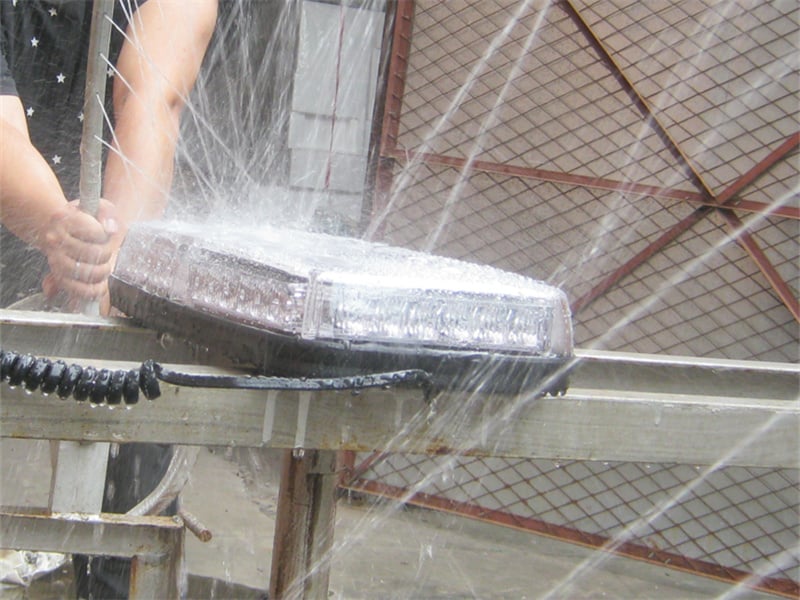
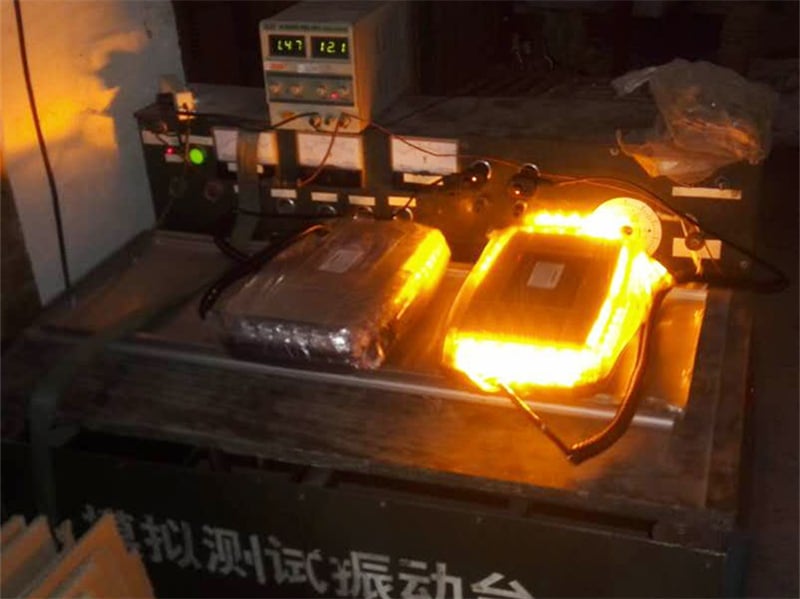
While the carton is the first line of defense, the product itself undergoes a gauntlet of tests that exceeds industry standards. Before a Mini Lightbar ever sees a box, it must survive our Comprehensive Durability & Performance Protocol:
3. Documented Precision: The QZ/LY8.4-9 Standard
Our refusal to compromise is backed by data, not just feelings. Our inspection follows the QZ/LY8.4-9 specification strictly. For example, when inspecting cartons like the one designed for our LED (WM) 926-b z-3 model (Double-wall corrugated牛皮 paper board), we check specific metrics:
|
Inspection Item |
Strict Requirement (Per QZ/LY8.4-9) |
Why It Matters |
|
Crease Lines |
|
Prevents the box from collapsing under stack weight. |
|
Cut Edges |
|
Ensures structural rigidity during palletizing. |
|
Staples/Nails |
|
Prevents the box from bursting open during rough handling. |
|
Printing/Markings |
Clear text, correct port codes (e.g., FORT MILL, SAVANNAH), accurate P/O numbers. |
Ensures smooth customs clearance and inventory tracking. |
Conclusion: Your Peace of Mind is Our Priority
When you source from LIYI, you aren't just buying a light bar; you are buying the assurance that comes from a system where even a slightly imperfect box is considered a critical failure.
We intercept the problems so your customers never have to see them. Whether it's a high-voltage water test or a microscopic check of a carton crease, we stand guard so your reputation remains spotless.
Choose LIYI. Choose Certified Reliability.

 EN
EN